
Art
Should Fan Art Go in an Illustration Portfolio?
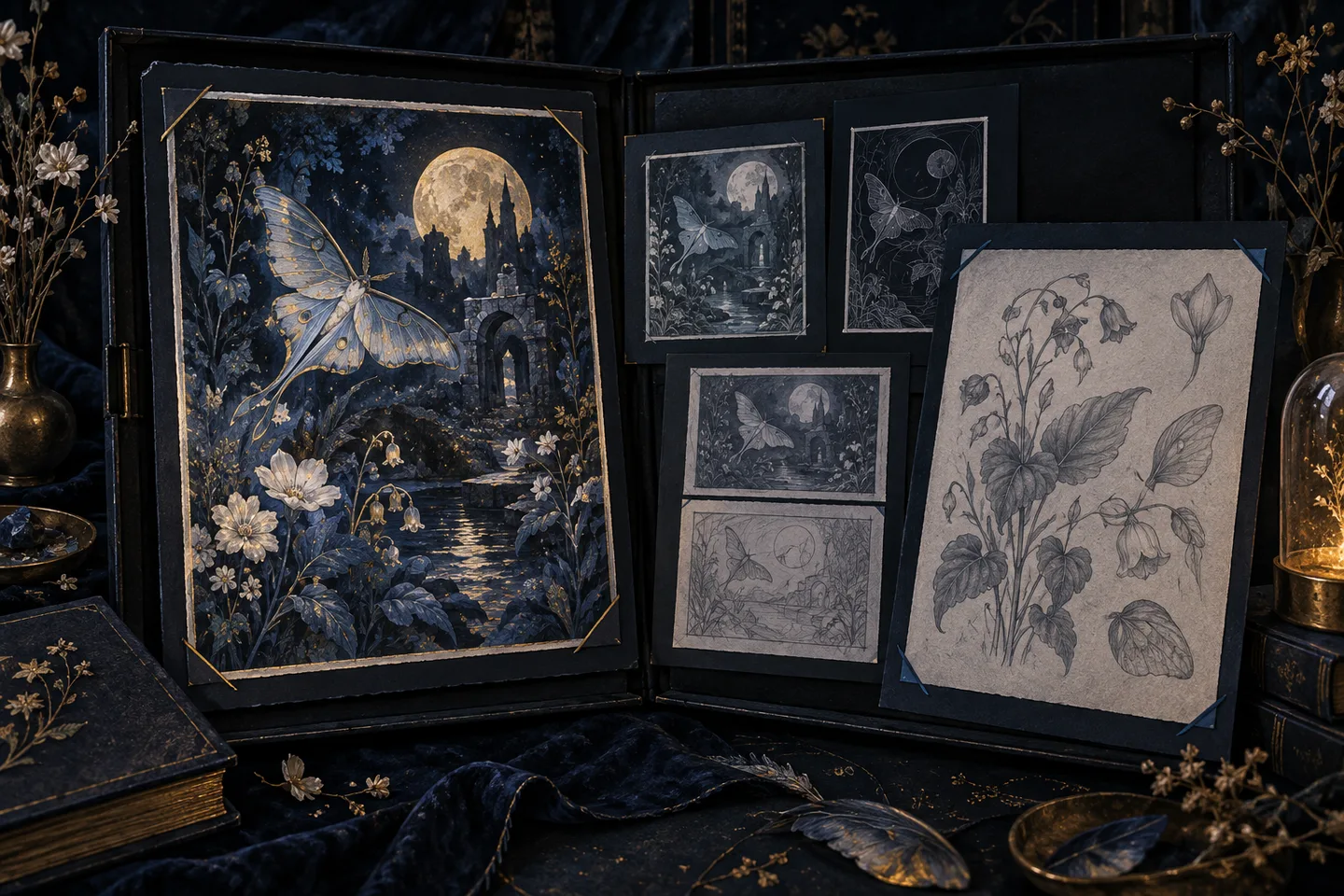
Fan art can show drawing skill, atmosphere and an inventive reading of a familiar character. Its place in a portfolio depends on the recipient and the purpose of the selection. A personal gallery can centre on work you enjoy making. An admissions portfolio must answer a particular programme’s requirements. A portfolio for a prospective client must show skills relevant to the brief. Start with the reader, then decide whether the fan piece helps that reader judge your work.
Read the exact requirements
For an application, check the institution, degree level, major and track. Do not assume a rule from one programme applies across the school. SCAD’s general submission guidelines say that work must be original in concept and fabrication, that applicants must identify their role in group projects, and that work influenced by another artist or a pop-culture reference needs proper citation. Citation is therefore part of presenting a referenced piece, but it is not a blanket assurance that every fan illustration meets every programme’s criteria. Read SCAD’s portfolio and writing guidelines.
ArtCenter shows why the distinction matters. Its Illustration Entertainment Arts requirements expressly exclude fan art. Leave it out of that submission, however accomplished the piece is. The Entertainment Design concept track, on the same requirements page, allows applicants to re-envision an existing story while asking for story worlds, research, development and final design decisions. That is a different task from simply showing a finished portrait of a recognisable character. Read the section for the track you are applying to and follow its complete instructions. Check ArtCenter’s requirements by major.
Build the full submission before making room for a favourite image. SCAD’s graduate illustration guidance calls for finished pieces reflecting industry assignments, illustration process work, drawings from life or direct observation, and sketchbook or journal work. A polished fan painting cannot replace evidence of those other skills. If a referenced piece fits an available place, compare it with an original piece that demonstrates the same skill. Choose the clearer evidence, and check the general submission rules as well as the illustration requirements. Review SCAD’s graduate illustration portfolio guidance.
Match the piece to the reader
In a personal gallery, you can include fan art because it records an interest or experiment. Give enough context for a visitor unfamiliar with the source to understand what you interpreted. You might group several pieces by technique or subject, but make it clear which characters and settings came from another work. A gallery label can explain what you chose to change without pretending the image was an official commission.
For a prospective client, ask what the selection demonstrates about the work they might need. A client assessing editorial illustration may want to see whether you can tell a story in one frame. Someone commissioning character work may look at expression, gesture and consistency. AIGA Indianapolis advises portfolio makers to explain a project’s context, goal, process and their own involvement. For an uncommissioned fan piece, describe the task you set yourself and the decisions visible in the finished image. Do not present it as work for the owner of the source character. AIGA Indianapolis guide to portfolio presentation.
There is no need to include the same piece in every version of your portfolio. Keep a broad gallery for visitors who want to explore your work, then make a tighter selection for each application or enquiry. If the recipient requests original characters or settings, show those directly. If the brief calls for observational drawing, include work made from observation. A fan piece earns its place only when it answers a real part of that recipient’s brief.
Test what the image shows on its own
Look at the piece as if you did not recognise the character. Is the action understandable? Do the pose, setting and composition establish a moment? Can someone see how you handled mood, colour, lighting or point of view? Familiarity can make an image engaging, but a reviewer should still be able to assess your decisions in the artwork itself. If recognition supplies most of the story, the piece may be better suited to a personal gallery than a portfolio chosen to show narrative skill.
A finished portrait might demonstrate colour, likeness and rendering. A scene with several figures may also demonstrate staging and relationships. Neither format is inherently stronger: the useful choice depends on the skill the reader needs to see. Compare the fan piece beside an original work, at the same size and in the order a reviewer would encounter them. Ask which one makes your contribution easier to understand without a long explanation. If the answer changes with the brief, change the selection.
Process material can clarify decisions that the final image hides. A few small compositions might show how you placed the figures; alternate poses might show how you arrived at a gesture; value studies might explain a change in focus. Select steps that reveal thinking, not every sketch you made. Keep studies from direct observation distinct from imagined character work, especially when a programme asks for both. A concise caption can connect the useful stages without asking a reviewer to reconstruct your process.
Label the reference and your contribution
Name the source work or character and identify the image as fan art. Then describe what you made: composition, drawing, painting, setting or another relevant choice. If a photograph, prompt or another artist’s image informed the work, identify that influence where the recipient’s rules require it. If someone collaborated, distinguish your part from theirs. This is particularly important for applications that ask applicants to state their role or cite pop-culture references.
Write a caption that fits the actual piece, such as “Uncommissioned fan illustration based on [source work]. I designed the setting and composition and painted the final scene.” Use that wording only if it is true. Avoid “official”, “studio project” or “client work” unless those descriptions are accurate. A second sentence can explain a visible choice: why you moved a scene, altered the lighting or changed the viewpoint. That gives a reader a way to assess your thinking without requiring knowledge of the original story.
Keep the caption brief enough to sit beside the image. Identify the reference first, then your role and the one or two decisions most relevant to the brief. If the work needs a paragraph of plot summary before its composition makes sense, consider showing a different piece for a reader who has not seen the source. The goal is to make the work understandable, not to claim originality for material you inherited.
Check presentation and rights separately
Attribution tells a reader what you made and what you referenced. It does not, by itself, establish permission to reproduce, distribute or commercially use someone else’s material. Equally, a school’s portfolio rule concerns its submission, not every possible use of an image. Before publishing or sending a piece, consider both whether it meets the recipient’s criteria and whether your intended use raises a rights question. If the latter is uncertain, resolve it separately rather than treating a careful caption as permission.
Selection checklist
- Identify the reader. Is this a personal gallery, a named programme or a response to a client brief?
- Read the relevant rules. Check the exact track and level, exclusions, required categories of work and citation instructions.
- Name the skill. Decide what the image proves through composition, observation, storytelling, process or finish.
- Compare alternatives. Choose an original piece when it shows the requested skill more clearly.
- Check the whole selection. Leave room for the other kinds of work the recipient has asked to see.
- Caption accurately. State the source, your contribution and any collaboration; consider rights for the intended use.