
Art
Draw a Recognizable Fan-Art Character Without Tracing: A Study Workflow
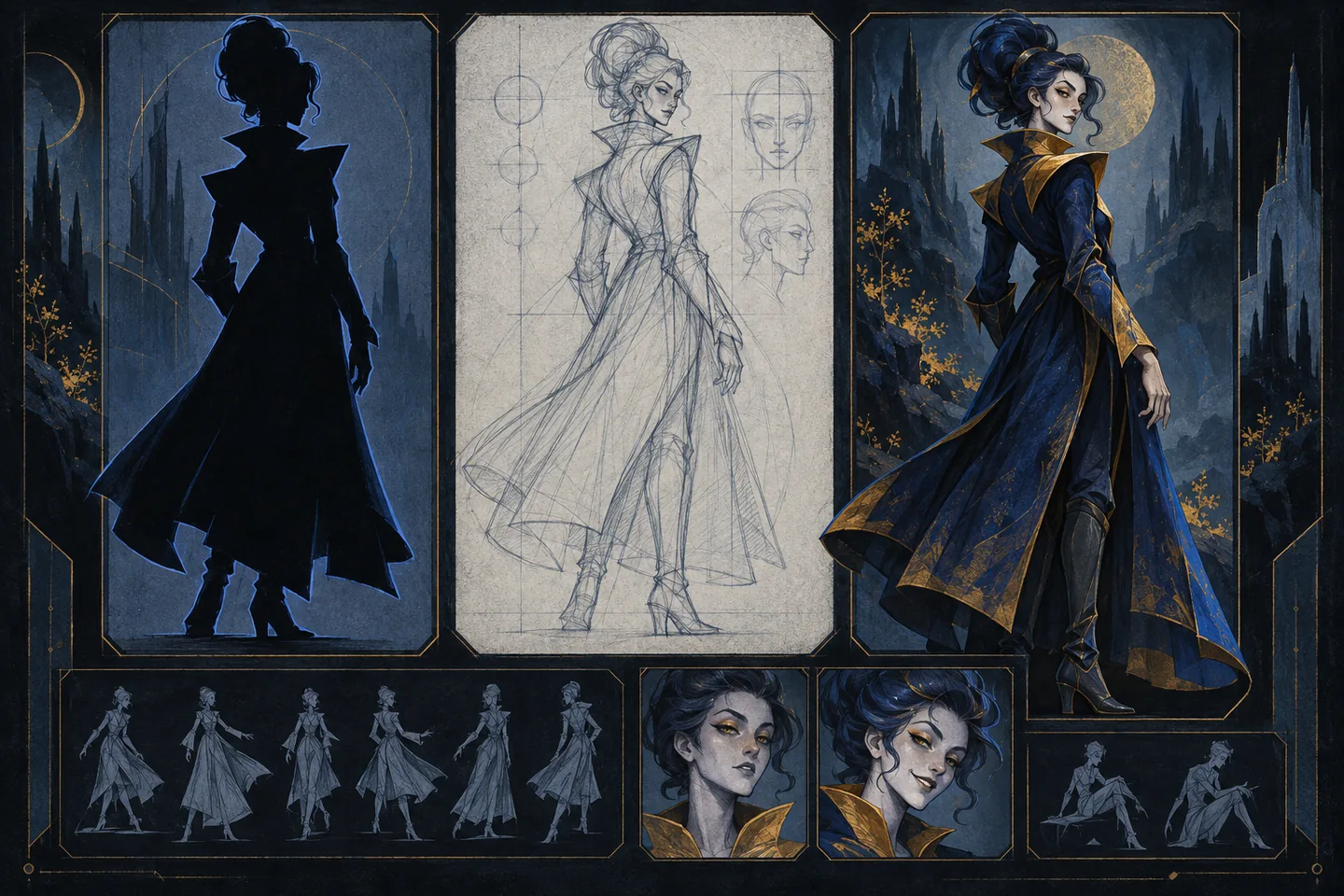
A character can be recognisable in a new pose. Study what makes the design distinct, then build a drawing around those observations. Tracing preserves the lines of one image; a character study helps you change the angle, gesture and expression while keeping the person legible.
The process moves from observation to small studies to a new pose, with a recognition test before you add detail. Keep the drawing exercise separate from any decision to publish or sell the result: drawing every line yourself does not settle rights in the underlying character.
Make a character map before sketching
Gather a few references you can lawfully access, showing more than one view or expression. An official image, a book you own or material shared with permission can help. Access to a reference is not permission to reproduce or sell it. Record where each image came from and any conditions on its use.
Make four short lists: silhouette, proportions, hair and costume. Describe shapes rather than copying outlines. Is the head narrow or broad? Where does the hair add width? Are the shoulders squared, sloped or hidden beneath a collar? Does the costume form one long shape or several strong blocks? Note a prop only if it helps identify the character.
Rank the observations. A distinctive hairstyle may matter more than eye colour; a coat shape may matter more than its buttons. Find a combination of cues that survives a change of pose. Adobe’s guide to drawing caricatures discusses head shape, feature spacing, body proportions and props as parts of likeness. You need not exaggerate them; examine their relationships.
Turn your notes into a design sentence, such as “a compact figure with high, rounded hair, narrow shoulders and a broad collar”. If that describes half the cast, return to the references for a more specific relationship between shapes.
Measure relationships rather than guessing at isolated parts. Mark roughly how many head lengths fit into the figure, where the widest point falls, and whether the hands reach the hips, waist or lower. For a screen character, compare more than one frame: perspective and costume can change the apparent proportions. Record a range where the references disagree instead of treating one image as a rigid model.
Study movement and expression in small drawings
Start with small gesture thumbnails. Draw the line of action, the tilt of shoulders and hips, and the head direction. Try reaching, turning, listening and stepping back. Leave out costume detail. Test whether you can carry the character’s proportions and manner of movement into different actions without borrowing a finished pose.
Draw a row of heads with different expressions. Keep the underlying head shape and feature spacing while changing the brows, eyes and mouth. An angry face should still belong to the same character as a quiet one. If every expression requires a particular screenshot, study the construction again. Adobe’s beginner drawing guide recommends focused practice on facial features and expressions.
Give each thumbnail one question. Can the head turn three-quarters without losing its shape? Can the costume bend around a seated figure? Does a restrained expression still read with barely marked lips? Compare the attempts before choosing one to develop.
If the face keeps drifting, draw a simple centre line and an eye line on each head before placing features. Rotate those guides together, then compare the spacing with your character map. This makes it easier to see whether the character looks different because of the angle or because you changed the proportions. Keep the sketches loose enough to correct them.
Keep observation and invention separate. In a digital file, name layers for reference notes, construction and new sketches; on paper, use separate pages. Procreate documents layer naming and options. Its “Reference Layer” is a colouring function; ordinary named layers suffice here. Separate pages or layers make it easier to spot when a sketch follows the arrangement of a source image.
Build a pose the reference did not supply
Choose an action absent from your references: pausing at a doorway, lifting a dropped object or turning towards someone outside the frame. Write it in one sentence. Make three compositions that vary the viewpoint, weight shift and hand placement. Settle the action before adding costume ornaments.
Block in the body with a line of action and large masses. Add the head as a volume and mark the face direction. Check your map: has the angle changed the important hair shape? Are the proportions intact? Would the costume fold this way? Adjust the construction, then add the strongest identifying cues.
Use references for particular drawing problems. A photograph may clarify a raised sleeve; a mirror or your own hand can help with a grip. Avoid carrying over another artist’s viewpoint, lighting, pose and arrangement while changing surface details. If a source composition dominates, close it and redraw from your written action and character map.
Before final lines, reverse the canvas or hold the page to a mirror. Check whether the head sits on the neck, both feet support the weight, and the hands serve the action you wrote down. If a pose is unclear, return to large shapes rather than hiding the problem under colour or costume detail. Save the more polished version until the action reads at thumbnail size.
Run a three-pass recognition test
Pass one: silhouette. Fill the figure with one dark tone and view it small. What survives without facial features, colour or symbols? An important hairstyle or costume outline should appear here. Some characters need more than a silhouette; note what the next pass must supply.
Pass two: structure and expression. Restore the main internal shapes in monochrome. Check head-to-body proportions, feature spacing, posture and expression. If the figure reads only with an emblem, the underlying design may be too generic. Compare several references while keeping your own pose and composition.
Pass three: selective detail. Add the costume shapes, colours or prop that aid recognition. Hide each in turn. Which helps, and which merely decorates? If one tiny mark carries the identity, strengthen the larger shapes. Check the drawing at its intended viewing size.
Ask someone familiar with the source to view the untitled sketch. Let them describe it before naming your intended character. If they recognise the costume but miss the person, revisit the head and gesture. If they name someone with similar clothing, check which proportion or expression you flattened out.
Try the exercise on one page
- Choose one character and record the origin of two or three lawful references.
- Write four observations under silhouette, proportions, hair and costume; circle the three strongest cues.
- Draw six quick gestures and four expression heads without tracing.
- Choose an action missing from the references and make three composition thumbnails.
- Develop one thumbnail, then run the silhouette, structure and selective-detail passes before refining it.
Save the first version beside the revision. Identify what improved recognition: perhaps a wider hair mass, different eye spacing or a more characteristic stance. Use that observation in the next pose.
Keep the rights decision separate from the drawing test
A recognition test tells you whether the drawing communicates the character, not whether you can use it commercially. The U.S. Copyright Office’s fair use FAQ explains that changing someone else’s protected work does not, by itself, grant rights in that work. Drawing every line yourself does not settle the underlying rights.
Consider intended uses separately: a private study, public post, commission and merchandise raise different questions. Non-commercial use does not automatically qualify as fair use, and no fixed percentage of visual change settles the issue. The Copyright Office’s fair use overview describes a case-specific assessment of purpose, the nature and amount of protected material, and market effects. Check permissions or licences before a planned use and seek qualified advice if the position is unclear.