
Art
Dramione Fan Art: Reading the Story Between Draco and Hermione

By Leif Anders
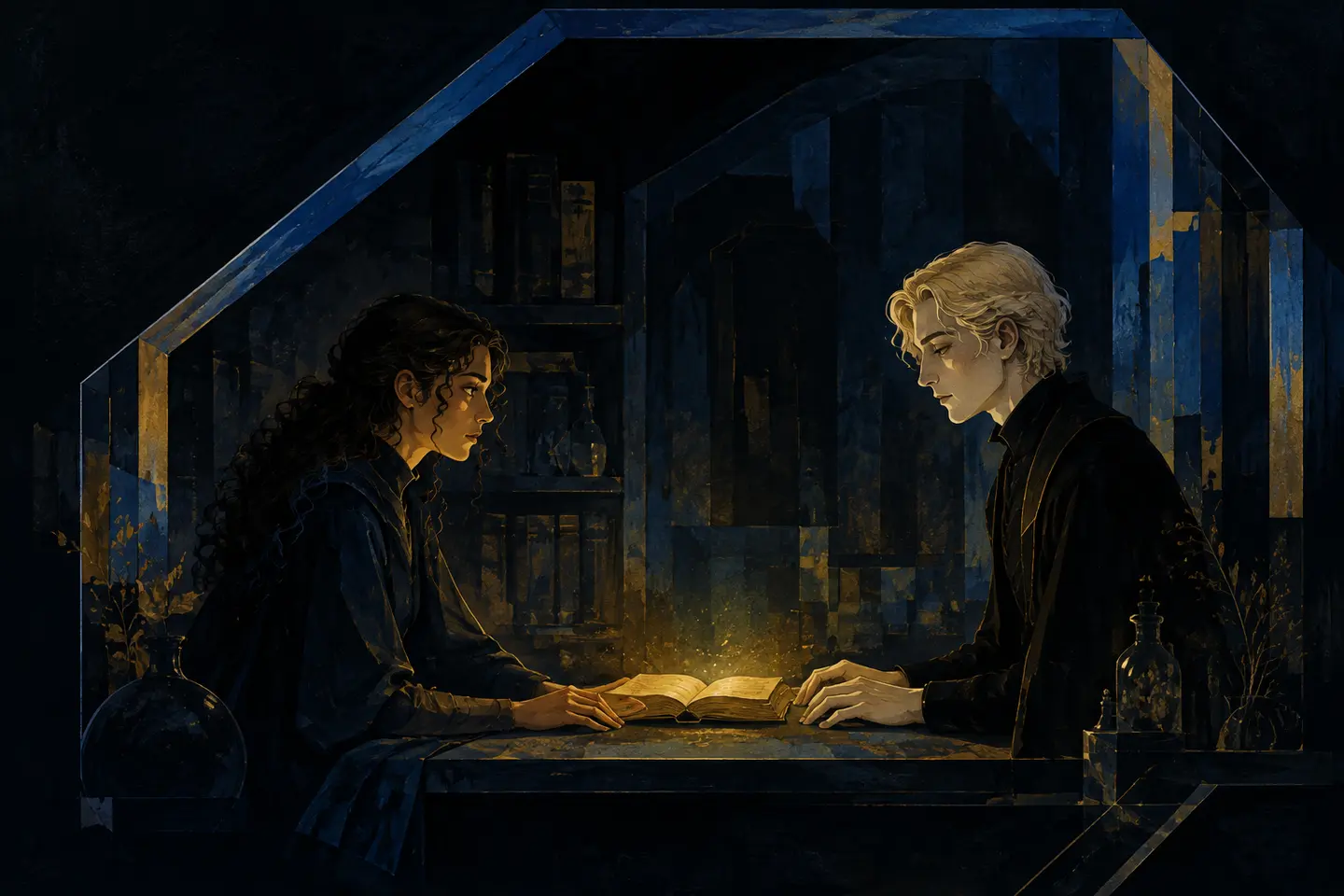
Dramione fan art imagines a romantic relationship between the fictional characters Draco Malfoy and Hermione Granger. A single image can suggest rivalry, an uneasy alliance, reconciliation or ordinary companionship. To read it closely, look beyond whether the figures seem attractive together. Notice what their gestures, surroundings and relative positions imply about the relationship.
For viewers, this approach makes an unfamiliar scene easier to interpret. For artists, it turns a broad pairing prompt into specific decisions about pose, framing and detail. Start with what is visible, then distinguish what the image establishes from what you bring to it.
Read the scene before supplying a story
Begin with a simple inventory: where are the characters, what are they doing, and where are they looking? Two figures across a library table might be studying, arguing or exchanging information. A closed book between them suggests something different from a page they are both reading. Neither detail proves romance, but each helps organise a possible story.
Next, ask what might have happened just before the depicted moment. A chair pulled away from the table could suggest a sudden departure. An unfinished letter might imply hesitation. Treat these as interpretations rather than facts unless a caption or accompanying story confirms them.
Illustration can connect a written scene with visual choices about emotion and attention. The linked discussion, Xia Gordon editorial archive explains, provides background on illustrative storytelling. When looking at an individual image, identify the particular detail carrying the narrative rather than assuming every object has symbolic meaning.
Separate characterisation from appearance
Recognisable hair, clothing and accessories help identify characters, but characterisation depends on behaviour. Hermione holding her place in a book while listening suggests divided attention; closing it deliberately suggests a change of priority. Draco standing rigidly beside an empty chair can read differently from Draco sitting with his shoulders relaxed.
Check whether both characters seem to have intentions of their own. Does each respond to the other, or does one exist only to decorate the scene? A convincing relationship image can give both figures agency through something as small as an interrupted gesture or a refusal to meet the other's eyes.
A tender pose does not, by itself, explain how conflict was resolved. If an artwork invites a reading of reconciliation, look for signs of choice, hesitation or mutual attention. Equally, avoid demanding that one illustration summarise an entire history. A scene can focus on one moment without settling every question behind it.
Distinguish source material from reinterpretation
Keep three categories separate: details established in the source narrative, recurring fan interpretations, and choices specific to this artwork. A familiar costume may signal one setting, while modern clothing may suggest an alternate universe. Neither tells you the complete premise without further context.
The University of Victoria research poster on Dramione fanfiction is a related research reference. When discussing art inspired by fiction, identify the particular story only if the creator has supplied that connection. Similar scenery or a familiar romantic trope is not enough to establish an adaptation.
This distinction also improves searches. Combine the pairing name with the kind of scene or medium you want: library sketch, post-conflict conversation, domestic comic or watercolour portrait. Add a story title only when seeking an illustration of that story. Broad labels describe a category, not a uniform style or interpretation.
Follow composition, gesture and light
Distance and framing
Compare the space between the figures with the space around them. A wide empty room can make a small exchange feel exposed. A close crop concentrates attention on faces and hands but may hide the wider situation. Ask what the framing encourages you to notice and what it leaves unresolved.
Watch for barriers: a desk, doorway or difference in height can separate the characters visually. Shared lines, such as both leaning towards the same page, can connect them. These devices suggest relationships; they do not have fixed meanings independent of the scene.
Hands, posture and gaze
Hands often clarify an otherwise ambiguous expression. An offered object gives a gesture direction; a withdrawn hand interrupts it. Compare that action with the face and posture. A smile paired with tense shoulders may suggest uncertainty, while relaxed posture can soften a guarded expression.
Follow each character's gaze. Mutual eye contact creates a different exchange from one character watching while the other looks away. Before assigning a motive such as shame or attraction, consider other explanations supported by the image. Distraction, fatigue and discomfort can produce similar poses.
Colour and contrast
Look first at the strongest light or contrast: it often attracts attention before small details do. If a letter is brighter than either face, it may be the scene's focus. Colour can separate figures from their surroundings or bring them together, but a cool palette does not automatically mean hostility.
Build an illustration around one decision
Choose a concrete moment rather than a general mood. For example, imagine one character returning a borrowed book after an argument. Decide who initiates the exchange, whether the other accepts it, and whether the book changes hands. Those choices give the drawing an action that can be understood without a long caption.
Make several small composition sketches before adding detail. Try a view across the table, a side view with an empty chair, and a close view of the exchange. Compare which arrangement makes the intended action clearest. If every version needs a paragraph of explanation, simplify the gesture or remove competing objects.
Choose materials for the marks you want to make. Loose pencil lines can leave movement visible; firmer ink contours can clarify silhouettes. Whatever the medium, check the image at a small size. The main action should remain readable when texture and decorative detail become less prominent.
Use references to solve specific problems such as hand position, fabric folds or perspective. Keep a record of their origins and any stated conditions. Avoid reproducing another artist's distinctive arrangement while changing only the faces. Practising from a reference and presenting a composition as your own are different activities.
Share with context and respect for the creator
Before sharing, find the original post and read the creator's instructions. Credit alone does not tell you whether reposting is welcome. If permission is unclear, share the original post through an available sharing function or ask before uploading a separate copy. Keep signatures and watermarks intact.
For event submissions, check the relevant rules separately. The linked Dramione Month page is an event-specific reference, not a substitute for an individual creator's preferences. Do not assume that participation in a public event makes an image available for unrestricted reuse.
Write captions that identify the scene without inventing its background. Preserve supplied content warnings, and avoid revealing a story's major developments without notice. The pairing label alone does not describe an image's tone or suitability for a particular audience. For accessibility, describe the central action, expressions and relevant setting in plain language.
When commenting, name a visible choice: the space between the figures, the interrupted gesture or the way light draws attention to an object. Phrase uncertain readings as questions or personal impressions. This gives the artist something concrete to respond to while leaving room for an interpretation different from your own.